Saturday, March 24, 2007

Yard Work


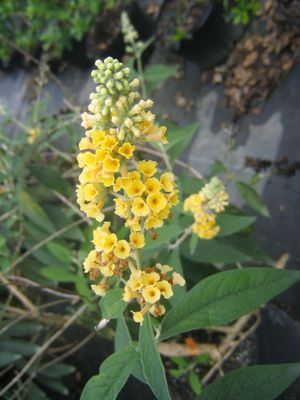
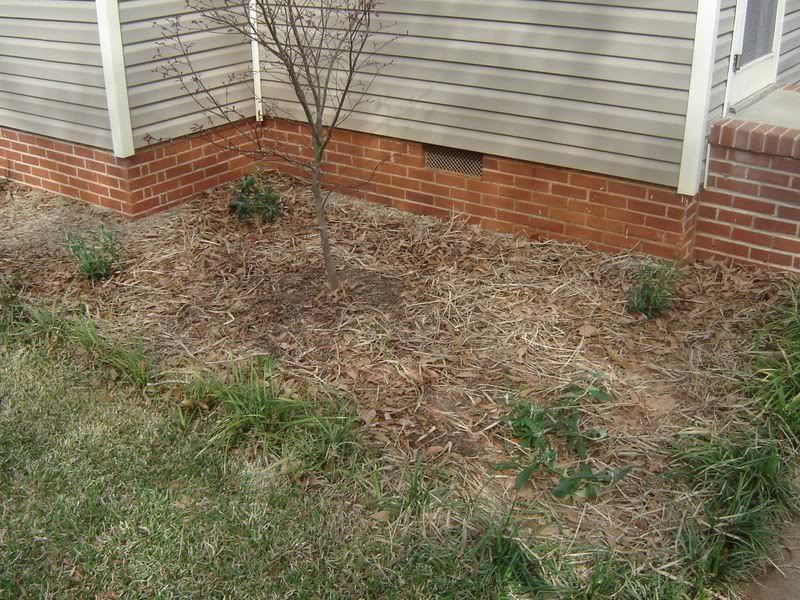
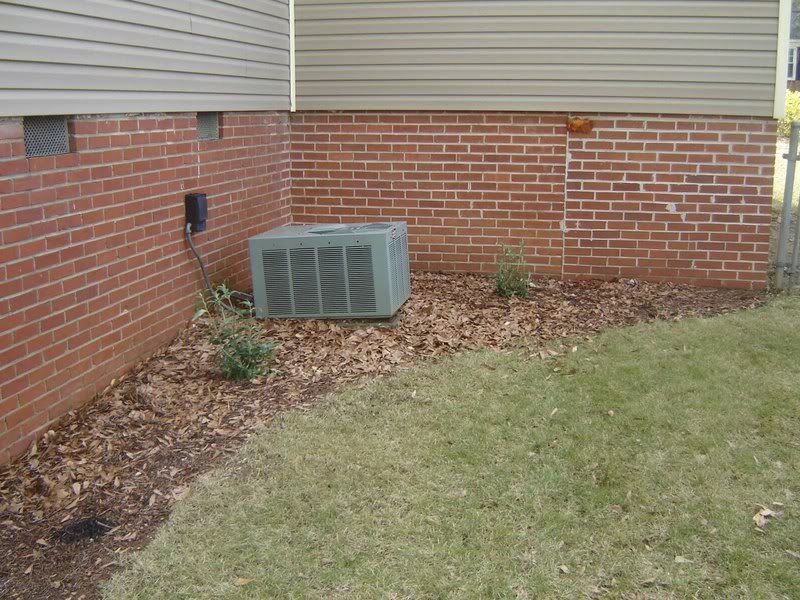
Today I got started on my yard work. I needed to cut the grass, pull some weeds, decide what to do with the Pompous Grass in the front beds and ultimately plant something different in the front beds. Last year I planted some Pompous Grass in the front beds and it grew too big. I dug up the Pompous Grass today and planted the following: (2) Queen's Robe Butterfly Bush, (2) Sungold Butterfly Bush & (2) White Profusion Butterfly Bush. The Queen's Robe needs partial Sun so I planted those around back and the other 4 are full Sun, so they went in the front where the Pompous Grass used to be.

Pollen Count

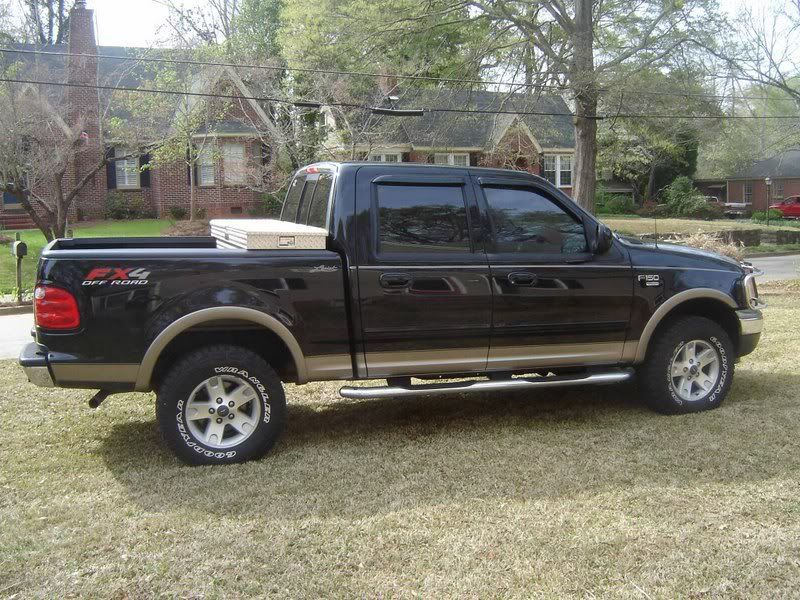
The pollen count is off the chart the last few days. I have a black Ford F-150 that is now bright yellow! Everything in town is coated in a light dusting of pollen. When it rains it will look like a yellow river running down the street. Let's just hope we get some rain soon. I have been watering the back yard most of the day, hopefully this will kickstart it to turn green. I have Emerald Zoysia grass planted in the back yard and it really looks great!

Watering

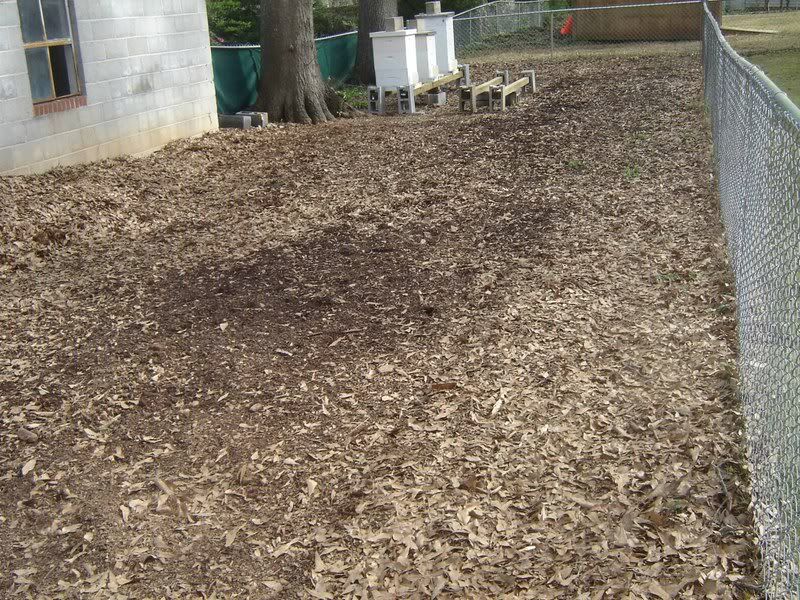
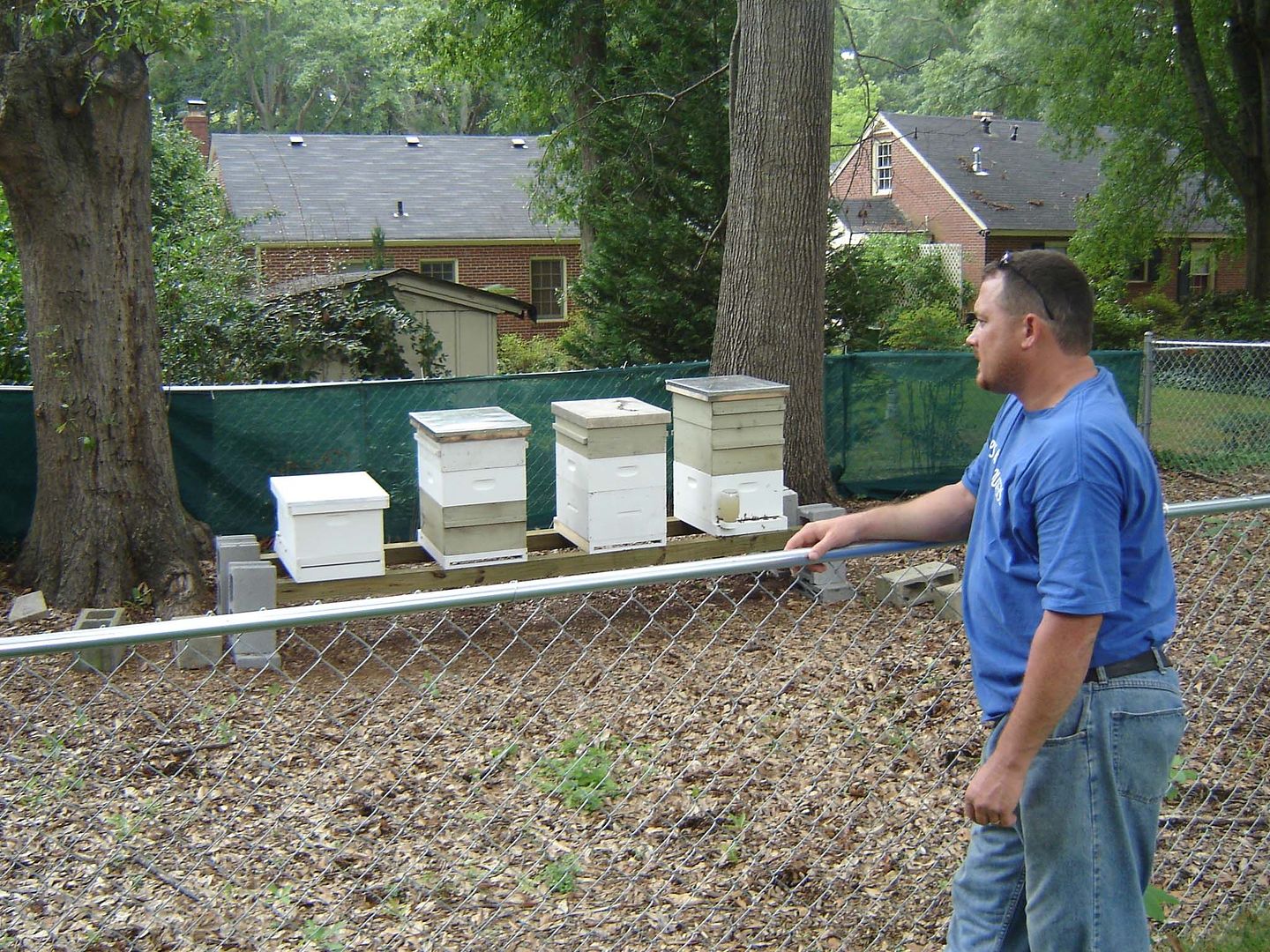
I have been watering the area around the bee hives a lot this week. Remember I planted some corn, giant sunflower, cantaloupe, watermelon & wildflowers this past Monday. I'm traveling out of town this coming week for a project and am trying to get a jump on my watering. Hopefully Katie will remember to water while I'm out of town.

Pictures

Click here to see the front beds planted with Sungold & White Profusion Butterfly Bushes, Queen's Robe planted around back, the Emerald Zoysia back yard & the area that will hopefully produce a garden!

Tuesday, March 20, 2007

The buzz business

Printed in High Country News
6/24/2002
by Ray Ring

Some people try to make a killing on killer bees

TUCSON, Ariz. - Twelve years into the killer bee invasion of the United States, Tip Tisdale steers his pickup truck into the driveway of a custom home in the desert outskirts of this desert city. It’s a hot Monday morning in late April and this is the U.S. city where the invaders, also called Africanized bees, are most established

The bright yellow-and-black logo on Tisdale’s truck, repeated on his T-shirt, identifies which side he’s on - AAA Africanized Bee Removal.

With the bravado that characterizes the men on the front lines, Tisdale walks toward the buzzing sound without protective gear, his face, arms and hands exposed. Pausing on the porch steps, he scouts the enemy: a loose cloud hovering under the porch roof overhang, composed of maybe 30 to 40 bees.

Like the symbol for nuclear energy, electrons circling round and round, the bees occupy their air space and emit a feeling of contained energy that might explode any moment.
I’m hanging back a few feet behind Tisdale, here to research how the bees are succeeding in the city, how people are adapting, and why the great national media machine has forgotten this once-sensational topic. Knowing that killer bees can take up residence in any nook or cranny of civilization - in the eaves of buildings, in the cushions of sofas and chairs left outside, under storage sheds, in cardboard boxes, flower pots, light fixtures, old tires, utility boxes, bird houses, culverts, woodpiles, trash cans, towers and windmills, even in vehicles, including airplanes - I’m ready to run.

In a half whisper, trying not to trigger the bees, Tisdale explains what we’re seeing. These must be foragers for a colony that’s hidden inside the wall of the house. He points out that some are crawling into a hole gnawed through the wall. Inside the wall there must be a lot more bees carrying out a range of duties, and a queen. If the colony is only a week or two old, there are maybe 10,000 bees in the wall; if the colony is several months old, there could be 30,000

"The foragers are bringing water in - see?" Tisdale says. Squinting, concentrating on the tiny moving shapes, I can make out water droplets on the bees’ legs. If they were foraging for pollen, they’d have yellow sacks of it bulging on their legs. The water helps them survive the drought that has withered the desert for months; they haul the droplets from swimming pools, hot tubs and landscaping irrigation in this upscale neighborhood. They bring the water inside the wall and use their wings to fan and evaporate it, to keep the colony cooler than it would be otherwise. The insulation in the wall also helps.

"They like houses, because people provide cooling in the summer and heating in the winter," Tisdale says. "They are a tremendously intelligent animal."

He glances around, alert for any patrol bees that might be coming at us. Fully established colonies have storehouses of honey and brood to defend, and it begins with a perimeter of patrol bees. "The patrol bees look for trouble," he says. "They’ll buzz in your face. If you don’t react right or if they get a signal from you they don’t like, they tag you." Meaning, they sting you.

He advises that we’d better stand still and hold our breath if any patrol bees check us out, because one thing the bees really don’t like is any mammal’s breath - mammals are predators who might be after the honey. We’re lumped in with badgers, skunks and bears. Above all, we’d better not swat a patrol bee or even try to brush one off. Just one sting or one smashed or ticked-off patrol bee would send a chemical pheromone signal to the rest of the colony, and in a split second the next level of defense, many thousands of guard bees, would come streaming out.

"Every female with a venom sack would dump on you," Tisdale says.

So far, it’s a Western thing. Since the bees invaded from Mexico, they’ve stung four people to death in Arizona (including one who was allergic to bee stings). As many as eight more people have been killed in New Mexico, Southern California and Texas. There is disagreement about how many deaths the killer bees can be blamed for: Do we count the bulldozer driver in Texas who jumped off to run from bees and got run over by his own machine?

As the bees continue to spread, several thousand people as far north as Las Vegas have been stung, many of them hundreds of times each, without dying. Tisdale, a lanky 53-year-old who has worked the front lines about five years, has been stung too many times to count, at times so severely that his arms swelled up painfully or his eyelids swelled shut for days.

At this house, where a family inside has called for help, only a few patrol bees come forward to check us. Tisdale says it indicates this colony has only been here a short time and doesn’t yet have much stored up to defend. Even so, before proceeding any closer, it’s time for us to suit up - thick cotton coveralls, canvas gloves to the elbows, pith helmets draped with hoods that seal to the coveralls, and strategically applied strips of duct tape.

Getting down to business, Tisdale closes in with spraycans of professional grade pesticides. He whacks down the bees we can see, climbs a ladder so he can spray into the hole, uses a prybar to widen the opening, keeps spraying. Alarmed bees pitter-patter against us, trying to sting us through our gear, but it is not the folklore classic killer bee explosion. In a few minutes the whole colony falls silent and still, and Tisdale presents the customers with the bill: $235.

The Triple-A dispatcher relays another call for help and we drive to another neighborhood, where there is another kind of problem - a swarm. Thirty times a year or so, a killer bee colony divides: Some of the bees swarm away with the queen looking to colonize new territory and the rest stay put and raise a new queen. It is a way they maximize their territory.

We find the swarm in the backyard, clinging to a tree branch. It’s a writhing, solid mass of maybe 12,000 bees surrounding the migrant queen. The swarm is resting on the branch. Tisdale and Paul Gerard, another Triple-A pro who rolls in, discover that the swarm has just split from a big colony under a storage shed. We suit up again and the pros attack the swarm in the tree and then the colony under the shed. They use a smokepot to slow the bees, a soapy spray that clings to the bees and clogs their breathing, and the pesticides. Ripping up the floor of the shed to expose the colony, they find the eerily beautiful fins of honeycomb, pupae in the wax cells, and the emergent queen. It’s sweaty work in the thick protective gear, staving off the bees’ defense. Thousands of dead little bee bodies curl on the ground. But it only takes about an hour and half to do this job and present the bill: $600.

Tisdale’s cell phone keeps jingling. On an average day, he estimates, he does six service calls; on a busy day, he averages 10 to 15. Triple-A’s going rate is roughly $200 per hour per man on the jobs I observe, split between those on the front and the head of the company, who does the dispatching. Triple-A is probably the biggest anti-killer-bee company in the world, with five pros in Tucson and eight in the Phoenix metro area, a statewide toll-free number and 24-hour-a-day dispatching. Even the company’s name is a marketing ploy - AAA to be first in the Yellow Pages when customers under siege are looking for bee removal in a hurry.

I’m beginning to see that this is a story not only of ecology, but also of the good old resilient American instinct to make a buck out of anything that presents itself.

Read the rest of the article posted here:

The Buzz Business

Preparations for a garden


This past weekend while working on the deck I also rented a rear tine tiller and turned over the soil in "the dog run". This is the area where I keep the 3 honeybee hives. I've decided to give my little Italian friends something to do in my backyard this Spring & Summer. After I returned from a business trip to Valdosta, Georgia on Monday, I planted sweet corn, watermelon, giant sunflower, cantaloupe & a mix of wildflowers. I did this all from seed. It is my hope to "fill up" some of the dead space in the dog run with some vegetation and bright colors. I'm currently watering the whole area really well and this should start the germination process. Also, I started germinating some Anise Hysopp & Bee Balm indoors last night. I will also plant these in/around the hives.

I've never planted a garden before and don't really know what to expect. The soil is very dark and rich in color. I noticed a lot of earth worms when I was tilling the area. Earth worms are good aren't they? I was always told that worms were a sign of good soil. I planted the seeds "guerrilla style". Meaning that I didn't concern myself with planting them in perfect rows, spaced perfectly apart. I figure that I get what I get, and that will be good enough. I just want to fill the dead space and if I get something for my efforts, it will be a big plus.

Does anyone else plant for their bees?

Phase 2 - Finishing the Deck


Last Summer my Father built a deck on the back of the house for me. I of course assisted greatly but my skills are more directly related to the IT/computer field than carpentry. We completed "Phase 1" which was everything except the handrails coming off the back steps, the railing around the deck and the steps from the deck to the yard. If you've purchased any amount of pressure treated wood and all the associated materials to build a deck lately you will understand why this project was broken in to 2 phases...I ran out of $$$.


This past Saturday we began "Phase 2" which will be the final phase. The railing around the deck will look like the railing on the back steps. This deck is well built and everything is either screwed or bolted together with carriage bolts/lag screws. Additionally, we used joist hangers & metal corner brackets everywhere. This has posed somewhat of a challenge when we attached the posts for the handrail. We had to adjust accordingly to work around the metal brackets. We are hoping to finish the handrail around the deck this coming weekend and then the step from the deck in to the yard the weekend after next. I'll keep you updated on our progress and will also post some more pictures.

Sunday, March 04, 2007

Saturday was a work day...

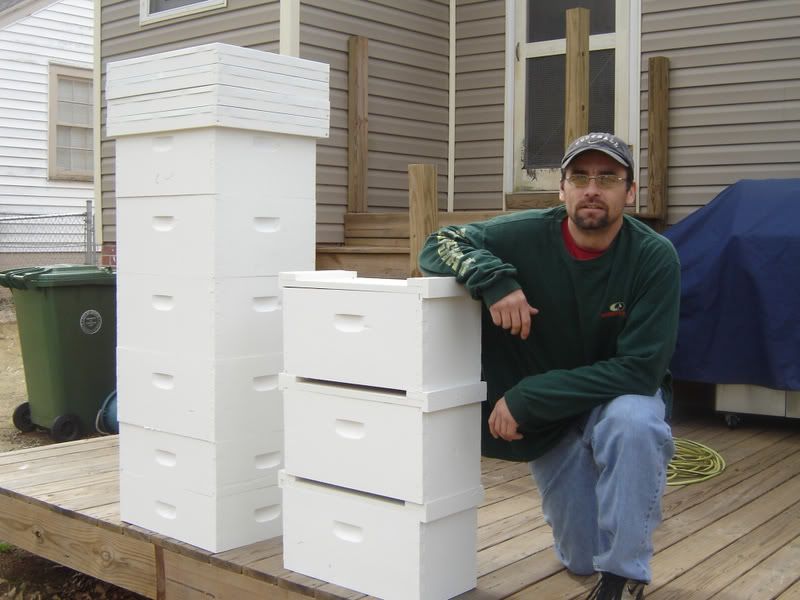
My order from Mann Lake arrived mid-week while I was away on a business trip. Saturday morning my good friend Ronnie Tindle (pictured at left) helped me assemble & paint the following:
4 -9 5/8" deep brood boxes
3 -Nuc's boxes
2 -honey supers
4 - outer covers

This only took us a couple of hours from start to finish and was a real efficient process thanks to Ronnie's assistance. I would have spent most of the day on this task if I didn't have his help! As a side note, Mann Lake did short my order by leaving out the 3 bottom boards for the Nuc boxes. I called and left a message with the after hours receptionist. Someone is supposed to call me on Monday. I hope they ship the missing parts without any hassle. I have ordered from them on several occasions and been very pleased.

Just after we finished the assemly/painting of the materials (timing is everything!) from Mann Lake my brother Brian showed up with his sidekick Jeff Harrington. Ronnie & Jeff stood at the fence while Brian and I inspected the 3 hives we currently have. Unfortunately, I believe we have 1 hive that is Queenless at the moment. Almost no brood, no eggs and a low population. I did find several capped Queen cells. We thought about combining this hive with one of the others but decided not to. I want to see if the Queen will emerge from her cell, mate and begin to lay eggs. This hive will be one to watch over the next several weeks. Stay tuned....The 2 other hives appear to be booming and I'm going to attempt a split around the first part of April. I have 6 Italian Queens coming from Rossman apiaries on April 10th.

I have had a Fire Dancer fire pit for quite some time. I wanted to make it a more permanent part of my deck and Jeff offered to help me out. We went to Lowe's and got some Liquid nails & concrete adhesive to use. We were able to assembly the stones around the fire pit and "glue" them together. It looks great! I'm really pleased with the work Jeff did!

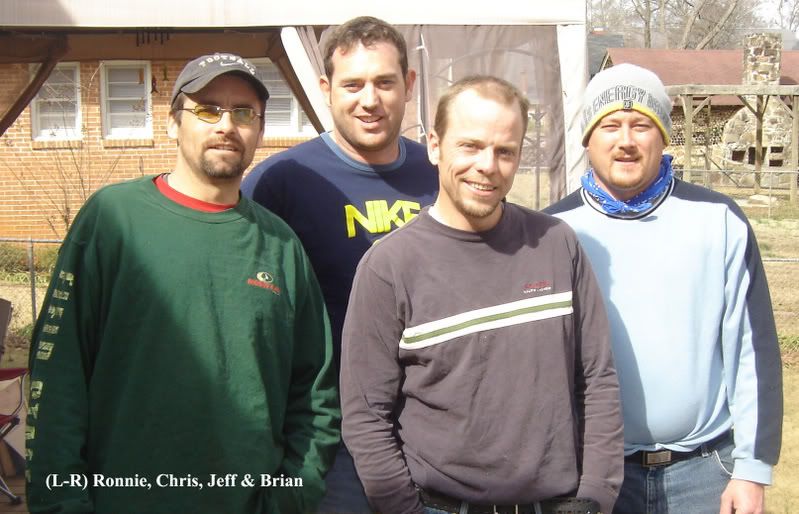
Click here to see a group picture of all 4 of us. We are a Motley crew that's for sure. If you only knew the stories we were telling on Saturday!!! We've had some good times together that's for sure!

Brian got stung twice when a couple of bees went up his pants leg.
Ronnie got stung on the forehead while watching from the fenceline.
Somehow Jeff managed to escape sting free. If you knew Jeff you would understand how miraculous this is! Jeff is usually the 1st person to get hurt or get into trouble.

Sting Count:

Chris - 7
Brian -5
Ronnie - 1


Monday, February 19, 2007

Beekeeping Tips

  • Treat for Tracheal mites with menthol in August
  • Treat for Varroa mites on October 1st
  • Treat for Nosema in late October or November
  • Prevent robbing before it starts, equalize your colony populations
  • Feed 2:1 sugar syrup to provide 70 pounds of winter stores
  • Requeen your colonies in late August or September 1st
  • You will have NO DEAD BEES IN THE WINTER, and big, strong, HEALTHY colonies ready to make a record crop in the spring.

Sugar Syrup Ratios

Sugar syrup can be made up into three different strengths, and you use different strengths for different purposes and at different times of the year, as follows:

1:2 -1 pound of sugar dissolved in 2 pints of water is primarily used as a egg laying
stimulant for the queen in late winter and early spring

1:1 -1 pound of sugar dissolved in 1 pint of water is primarily used as an artificial
nectar to get bees to build comb and feed brood larvae in spring and summer

2:1 - 2 pounds of sugar dissolved in 1 pint of water is a winter feed substituting
for honey in the fall or early winter

How to Make a Split

How to Make a Split

A split is made to either increase colony numbers or to prevent swarming. In either case, a colony is NOT split unless it is strong in numbers of worker bees, has a prolific queen, and is healthy. Although sometimes desirable to be done in very early spring, a split should NOT be made until decent flight weather for pollen or nectar collecting in the spring. In Maryland, because our total honey crop is made in April and May, and little, if any, is collected during the rest of the year, the new split is NOT going to produce any honey in its first year. This might be dramatically different in states that have nectar collection during the summer and/or fall.

Order a new queen, preferably MARKED, and upon its arrival, give the queen a drink of water and put her in a cool, dark place until the next day. Go to the colony you want to split, find the queen and ISOLATE the frame she is on and the adhering bees in a spare hive body while you select the frames you want to remove and move them to the new split. I select 2 frames of honey, 2 frames of CAPPED brood, 1 frame of OPEN brood, and 1 frame of nectar and pollen ALL WITH ADHERING BEES which is a total of 6 frames.

Put these 6 frames in a new hive body and add 3 more frames of drawn comb, totaling 9 frames, put the new queen cage in place between the frame of OPEN BROOD and the frame of nectar, and then SHAKE the adhering bees off 2 BROOD frames from the old colony. Add a bottle of 1:1 sugar syrup and do not touch for at least 3 days and if the queen is out of her queen cage, remove it, and put the 10th frame of drawn comb in place. Going back to the original colony, return the old queen on her frame to the colony and replace the 6 frames you have removed for the split with 6 frames of drawn comb. YOU HAVE A SPLIT!

If you do NOT have drawn comb frames, if you are LUCKY, you might get by using foundation, but there MUST BE A STRONG NECTAR FLOW PRESENT and/or a CONTINUOUS FEED OF 1:1 SUGAR SYRUP to get that foundation drawn and drawn properly. As I have repeatedly said for over 40 years FOUNDATION IS NOT DRAWN COMB.

Making Fondant

Bring a quart of water to a boil in a medium to large pot. Turn off the heat and add five pounds granulated sugar, stirring constantly. When dissolved, bring water back to a boil and keep stirring. Use a candy thermometer and bring the mixture to 260-270 degrees (hard ball candy state). Do not burn the sugar. Pour the mixture into molds (cookie sheet lined with wax paper works well). When cooled and set, break into convenient-sized pieces and store in freezer, between wax paper sheets until needed (Adapted from Beekeeping, A Practical Guide, by Dick Bonney).

A Larger Recipe:

15 pounds granulated sugar
3 pounds corn syrup
4 cups water
1/2 teaspoon cream of tartar
Prepare in the same manner as the smaller recipe only use a larger pot.

Simply place a cake of fondant on the top of the frames closest to the main cluster of bees. A super or a one-inch wooden rim should be put in place to allow room for the fondant and bees. A six-pound cake may last 10-15 days if the colony is large.

Sunday, February 18, 2007

Treating for Varroa, Small Hive Beetles & American Foulbrood Disease


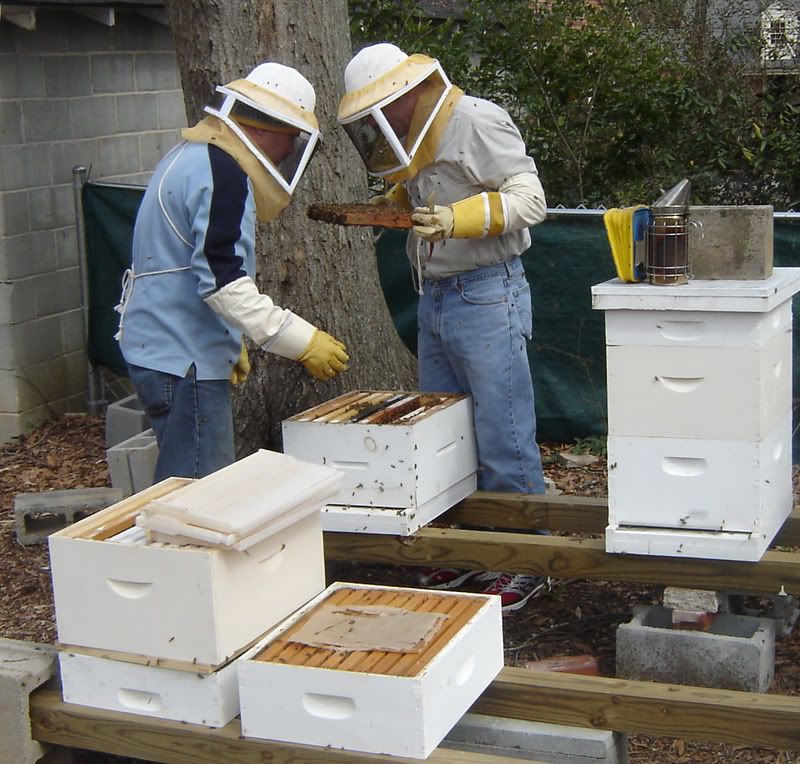
Brian came by to give me a hand on Saturday. We needed to treat against American/European Foulbrood disease, Small Hive Beetles & Varroa Mites. I'm not too concerned about "organic" beekeeping at this time. I'm more worried about protecting my investment and keeping the hives alive & strong. Perhaps as I gain more knowledge & experience I will work my way towards all natural or organic hives. Until then, I will use the recommended chemicals to treat for disease. We installed Apistan & Check-Mite strips for the SHB & Varroa Mites and used Terramycin powder for the AFB. Note in the picture the pollen patty I added last week. They really seem to eat this up fairly quickly. I would guess there's about 30-40% of this patty left. I removed it and discarded what was left because the SHB will lay eggs in the patty and this causes the SHB populations to explode. Overall all 3 hives seem to be thriving. We are expecting the weather to be well in to the 70's by mid-week and I'm hoping this will last for several weeks. I want to split all 3 hives and some warm weather will make this possible.


Brian & I now have a game plan for his future beekeeping. I'm going to place an order for enough equipment for 5 hives. I'll order this from Mann Lake. Once this arrives, I'll do a split to fill 3 of the hives and the other 2 hive we'll use the packaged bees I ordered from Rossman Apiaries. I will still need another package of bees for the Top Bar Hive that I have.


Sting Count:


Chris - 7
Brian - 3


Sunday, February 11, 2007

Mystery ailment strikes honeybees

By GENARO C. ARMAS, Associated Press Writer
Sun Feb 11, 6:12 PM ET

STATE COLLEGE, Pa. - A mysterious illness is killing tens of thousands of honeybee colonies across the country, threatening honey production, the livelihood of beekeepers and possibly crops that need bees for pollination.

Researchers are scrambling to find the cause of the ailment, called Colony Collapse Disorder.

Reports of unusual colony deaths have come from at least 22 states. Some affected commercial beekeepers — who often keep thousands of colonies — have reported losing more than 50 percent of their bees. A colony can have roughly 20,000 bees in the winter, and up to 60,000 in the summer.

Read the rest of the article: Mystery ailment strikes honeybees

February inspection - getting ready for Spring...

I did a very thorough inspection of my 3 hives today. I also did a quick inventory of my extra tools, supers, frames, etc...I'm getting ready for the upcoming season!

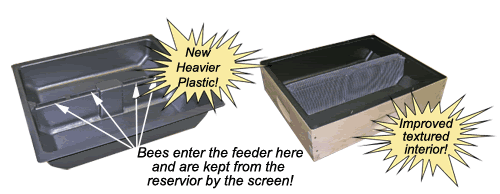
I found all 3 hives to be in really great shape! I found eggs, larvae & capped brood along with plenty of pollen, nectar & capped honey. I was worried that with the mild temperatures and increased activity in November & December this would have a negative effect on the colonies. So far I have been proven wrong! I did remove the hive top feeders that are used to give supplemental sugar syrup. I also added a 9 5/8" deep hive body to one of the colonies. It was busting at the seems and needed the extra room. I also took this opportunity to add 1 pollen pattie to each colony. This is done to give the hives a "kick-start" and the Queen should start laying pretty heavy. This will allow for a fast Spring population build up. More bees = more honey, right?

You may remember from an October post that I had a 4th hive that "diappeared" on me! I'm going to order (2) 10lb packages of bees w/Queens. One will replace the hive that absconded & the other will be used for my Top Bar Hive.

I've also put together a list of items I will need to order from Mann Lake. I will need to medicate for Varroa mites, tracheal mites, American Foulbrood & Small Hive Beetles. I also need (3) 9 5/8" hive bodies for brood boxes, (30) plastic rite-cell frames & (1) swarm trap.

Sting Count:

Chris - 7
Brian - 3

Wednesday, February 07, 2007

Astronaut Lisa Nowak


You can only imagine how stunned I was to hear "Astronaut Lisa Nowak has been arrested in Orlando, Florida....."..blah-blah-blah! The words hung in the air for several moments as I tried to place the name I was certain that I knew. I was assigned to VAQ-34 at Naval Air Station Lemoore, California in the early 90's. Although I don't specifically remember Captain Nowak, I have verified we were attached to the squadron at the same time. I have been following her career closely for several years and have been waiting for her 1st shuttle flight. Oh Well! It looks like her first flight will also be her last.

Other VAQ-34 notables:

  • U.S. Navy Commander Rosemary Mariner. 1990 - Commander Mariner becomes first woman to command an operational aviation squadron (VAQ-34).
  • Chuck Palumbo - now a professional wrestler
  • CW03 Chris Palumbo - Army helicopter pilot awarded a Silver Star. (Chuck Palumbo's brother). Chris was stationed at NAS Lemoore. He was also assigned to an F/A-18 Hornet squadron.

Tuesday, January 23, 2007

Bee sting treatments buzzing in modern China

Reuters
Updated: 11:40 a.m. ET Jan 23, 2007

Ancient remedy believed to ease pain, curb diabetes, even cure cancer

BEIJING - With doctors urging amputation to stop the gangrene spreading upwards from his toes, Liu Guorong was skeptical when a friend said bee venom might save his foot.
“I was doubting this place,” the 58-year-old diabetes sufferer said in a raspy voice during a visit to the Xizhihe Traditional Medicine Hospital on the outskirts of Beijing.
“When I got here, I had no idea what I was doing and what the bee sting treatment was all about.”

As Liu found out, it was painful.

Bees were placed on his foot and provoked to sting him in a bid to rejuvenate the blackened, rotting flesh by flooding it with a rush of protein-rich blood.

A folk remedy for treating arthritis, back pain and rheumatism for 3,000 years in China, practitioners say that such pinpointed stings can repair damaged cells, stave off bacteria and ease inflammation.

Doctors at Xizhihe hospital believe they can even cure liver ailments, diabetes and cancers.
They admit, however, that they do not really know how it works.

“Our knowledge has increased over the years,” said Xu Xiaowang, Xizhihe hospital director.
“But there are still large areas that are unknown to us all... There are too many unanswered questions,” Xu said.

Western-trained doctors dismiss the treatment as unscientific and dangerous.
“It’s alternative medicine and has no basis in western medical science... I would doubt its efficacy,” Professor Christopher Lam, a chemical pathologist at the Chinese University in Hong Kong said.

“People allergic to bee stings can develop hypersensitivity reactions like a sudden drop in blood pressure, swelling of the airways, cold sweats... it may be life threatening,” Lam said.
Hazy science notwithstanding, at 20 yuan (about $2.50) a sting, the treatment offers a cheap alternative to mainstream medicine.

“Doctors at other hospitals were telling me that they needed to cut my foot off,” Liu said. “I’d spent loads of money.”

Liu has been to Xizhihe several times to get stung and is now on a course of orally-taken bee venom medication. He now expects to keep his foot.

“The flesh is growing back ... I’m feeling better,” Liu said.

Dying traditionBee venom is just one of an exhaustive catalogue of ancient folk remedies involving bugs, herbs, animal parts and massage that make up traditional Chinese medicine (TCM).

Incorporating elements of mysticism and based on a philosophy developed several thousand years ago, TCM is regarded as an alternative medicine in the West, but in China it remains a central plank of modern health care.

About 3,000 private clinics provided TCM treatments to more than 230 million people in 2005. Health officials say it generated 95 billion yuan that year -- more than a quarter of the medical industry’s total income — and revenues have grown an average 20 percent a year over the past decade.

The government, sensing an export-driven cash cow, ploughed 740 million yuan into research and development last year in a bid to bolster TCM’s scientific credistinbility and standing in Western markets where alternative remedies are increasingly welcomed.

Read the rest of the article here:

http://www.msnbc.msn.com/id/16751949/wid/11915773?GT1=8921

Saturday, January 06, 2007

Happy New Year!!!

Lots of hive activity today! The temperature is about 68 degrees here in the Atlanta area and there's a lot of traffic in/out of all 3 hives. I'm still amazed at the amount of pollen that is being gathered. The pollen sacs on the bees are absolutely packed full!

The hives are thriving and they have plenty of food stores left. I look forward to the beginning of February when the Queen should start laying eggs to increase the population. I still anticipate adding a pollen patty to each hive to assist in getting the population to increase.

Wednesday, December 27, 2006

December Update

Sorry for the delay in posting! So far the Winter in Georgia has been relatively warm and uneventful. I've done some supplemental feeding with 2:1 sugar water. I did this because the hives felt light when I lifted them & it also gives me a little piece of mind. The upcoming season is rapidly approaching. Sometime in late January or early February I will give the hives a kick start by adding some pollen patties to encourage the Queen to begin laying. I may also feed some 1:1 sugar water. I expect to successfully over winter all 3 hives and am looking forward to watching the hive populations explode this Spring. I have extra hive bodies and honey supers ready to go when they are needed. I have decided to use the 9 5/8" deep hives for the 2nd brood box. This will ensure they have enough room to expand. I travel a lot for work and am skeptical about using the medium supers for the brood chamber. The last thing I want is to lose most of the population to a swarm.

I have been surprised by the amount of traffic most days. As I previously stated the Winter hasn't been too cold and most days warm up enough for the bees to break cluster and fly. I was surprised to see that a lot of pollen is being gathered. Most returning foragers are loaded with pollen. I wonder what the source of this pollen is?

Thursday, October 26, 2006

Hive Activity

I was outside today preparing 8lbs. of boiled peanuts for Saturday's UGA vs. Florida football game and noticed a lot of activity around all 3 hives. The last few nights have been near freezing and the daytime high has only been in the upper 50's. I presume the warm weather today has a lot to do with the amount of activity I'm seeing. Click on the picture for full-size.

Sunday, October 22, 2006

ALMOND POLLINATION - 2006 and Beyond

from November 2005 BEE CULTURE (pp.39,40)
by Joe Traynor

With the bee shortage of 2005 receding into the past, both almond growers and beekeepers are curious as to what the 2006 season will bring. 2006 pollination prices have doubled over 2005 and are in the $100 to $150 range (the highest prices for the strongest colonies). The two entities that drive the stock market, fear and greed, are also in play for almond pollination: fear (of going without bees) on the part of almond growers, and greed on the part of a few beekeepers who feel they are entitled to a $150 rental fee for substandard bee colonies. Beekeepers can also experience fear - of theft, of excessive winter losses, of growers not paying their almond pollination bills.

The driving force behind 2006 pollination prices is the unprecedented high prices for almonds - $3 to $4 a pound vs. $1/lb a few years ago. Growers don't mind paying high prices for bees if they know they are dealing with a reputable supplier that delivers a quality product.

There will be only a modest in bearing almond acreage in 2006, perhaps 20,000 more acres than in 2005; the real crunch for bees will come in a few years when bearing almond acreage hits 730,000 acres (vs. 550,000 today). Growers are looking to lock in long-term relationships with bee suppliers and are actively courting beekeepers; beekeepers are in the heady position of being able to pick and choose among anxious suitors (a position that can lead to a temporary "Master of the Universe" syndrome if one is not careful). What happens when almond prices drop back to $1/lb, as many expect they will, is anybody's guess.

If you've never brought bees to almonds before, you need to do some serious homework, just as the most successful pioneers that settled the early west were the ones that did sufficient homework before embarking on the trek. Good contacts are invaluable in this regard. Talk with beekeepers that have made the journey. Have a thorough knowledge of whom you're dealing with, whether it be a broker, a grower or another beekeeper that is placing your bees. Know that the most desirable almond locations are taken first and your truck may wind up in a muddy orchard or be forced to spend a day or more scattering bees to 10 different orchards 10 miles apart. Know the specific orchard where you will be taking your bees. Dealing with good people can mean the difference between a happy or a dismal experience. If you're dealing with strangers, ask for references and follow up on these references.

If you live outside of California, getting a reliable trucker is a key to being successful in almonds. Her again, it pays to do some diligent homework. Ask for recommendations from other beekeepers - you don't want your trucker taking a 4 hour break in Las Vegas on a warm afternoon. Get someone experienced in hauling bees and line up trucks well ahead of time. Give your trucker exact pickup dates and make sure he meets those dates even if it means multiple phone calls.

If you're from a southern state, make sure your equipment is free of Red Imported Fire Ants (RIFA) and arrange for an RIFA inspection certificate from your home state (current RIFA rules require an inspection certificate from the state of origin). Your load will also be thoroughly inspected at the CA border and if more than five ants are found (up from zero ants in 2005) your load will be turned back (an expensive one-time clean-up at the border and another go at crossing is an option). In order to pass border inspections, most beekeepers transfer bees to new or steam-cleaned pallets and pre-treat the ground in their holding yards with pesticides. Loads can also be rejected for weed seeds. Any debris of any kind on hives or pallets will trigger a meticulous inspection of your load at the border. Know the exact location where your bees will wind up in California (you will be asked this at the border). Make every effort to arrive in CA on a week day so that county inspectors are more available to check the load on arrival. For the latest RIFA (and small-hive-beetle) regulations, call (916)653-1440.

It is difficult for many beekeepers in eastern states to work up enthusiasm for almond pollination since most got into beekeeping for the life style and to make honey, not to put their livelihood on a truck and ship it to California (that crazy left coast). Some are looking to sell their bee operations rather than submit to a new life style.

There is long-term optimism for higher honey prices as developing countries, particularly China and India become more affluent and become major buyers of U.S. honey. If every person in China put a teaspoon of honey in their tea every day, U.S. beekeepers would be hard-pressed to meet the demand. With both India and China producing 10 times as many scientists as the U.S., it is likely that by 2040 China will surpass the U.S. as a world power, esp. if the anti-science bias of our current administration continues. South Korea (South Korea!) already surpasses the U.S. in cloning success. According to Dr. R.E. Smalley, Nobel Prize winning scientist from Rice University by 2010, 90 percent of all Ph.D. physical scientists and engineers in the world will be Asian living in Asia (Imprimis February 2005).

The best and brightest of our young people are looking to become lawyers rather than scientists (or beekeepers - and many beekeepers, whether they know it or not, are also scientists) because that is where the money is (and the accumulation of money is deemed to be a virtue in a capitalistic society). No other country comes remotely close to the U.S. in the number of lawyers per capita. Our bright young (and old) lawyers have a negative effect on the gross national product of our country. What a waste - and what a drag on the long-term prosperity of America.

But never mind. Looking at the world 30 years from now, U.S. beekeepers, although considered 2nd class citizens compared to the average Chinese, should fare well in the new world order. They should find a ready market in a prosperous China as millions of affluent Chinese peruse their (China-owned) Wall Street Journal while they sip their morning tea sweetened with premium U.S. honey. What a role reversal!

Getting back to almond pollination, the current situation offers new opportunities for individuals with beekeeping experience:

Supplying bulk bees - with 3 lbs of Aussie bees (+ queen) going for $100 an enterprising beekeeper in Alabama is offering 3# package bees (sans queen) for $45 to be delivered to CA just prior to almond bloom in order to boost up weak colonies.Why ship all that wood to California when you can just ship the bees?

California managers - Many out-of-state beekeepers would like to ship their bees to California but don't want to go with them. They are looking for a reliable person in California to care for their bees in the winter (if they winter in California) and to deliver the bees to almond orchards at bloom time.

Winter location scouting - with winter holding yards in California becoming increasingly scarce, a California based person could develop a good business securing yards and renting them to out-of-state beekeepers.
Colony strength inspectors - High pollination fees are causing almond growers to look more closely at what they are getting. A person should do quite well in a short period of time by offering an independent inspection program to growers.

Will there be a shortage of bee colonies in 2006? It depends on how you define "bee colony." There has been a shortage of strong bee colonies (defined as 8 or more frames of bees) each and every year since almonds were first planted in California 100 years ago; 2006 will be no different if two strong colonies per acre is the accepted standard. There will likely be the requisite number of bee boxes to cover CA's 570,000 bearing acres in 2006 but the content of these boxes won't be known until almond bloom commences in early February. If almond growers are satisfied with two 3# packages per acre as some were in 2005, we will see an influx of packages from Australia to make up any shortfalls. Florida bees will likely be used to cover any last-minute spot shortages as they were so used in 2005.

Whether there will be sufficient bees to pollinate 730,000 acres of almonds in 2010 is a question without an answer at this time. One solution would be to supply the same number of bees now being supplied but in fewer containers (boxes). One strong colony per acre will do the work of 3 or 4 weak colonies and should be sufficient. Two colonies per acre is the accepted standard for almonds and it is difficult to persuade growers to use less, no matter how strong the colonies are. If almond growers are satisfied with two 3# packages of Aussie bees, as some were in 2005, why wouldn't they be happy with one 10-frame colony per acre?

The solution to the upcoming bee shortage will not come from the bee industry, but from developing March-blooming almond orchards so that bees can be transferred to these orchards when February bloom is completed. Genetic material is available for March-blooming almonds. Perhaps South Korea can be prevailed upon to use their cloning expertise to make March-blooming almonds a reality.

TOP 10 SIGNS TO RETIRE FROM BEEEKEEPING

From Dec. 1995 and March 1996 beekeeper newsletters.

10.
Your friends think you look better with your veil on.

9.
You take off your hat in a restaurant and someone throws a dollar in it.

8.
You're heading back to Montana after the almonds and see a sign saying "Welcome to Phoenix".

7.
You put a little Bee-Go behind your ears before heading out for a night on the town.

6.
The Mayo clinic requests permission to use you as an example of the cumulative effect of bee stings.

5.
You find your coveralls stuck to the seat at the local cafe and are forced to leave them behind.

4.
A biker asks directions to the nearest restaurant and you perform a short waggle dance. He punches your lights out.

3.
You wear an Apistan strip around your neck to formal events.

2.
You're asked to give a talk at a local school and you give an hour demonstration on frying varroa with a magnifying glass.

1.
Your wife kicks you out of the house in the fall and doesn't let you back in until spring.

Saturday, October 21, 2006

New York City Honey

David Graves is the owner of Berkshire Berries and markets New York City Honey.

You can purchase it here:

New York City Honey